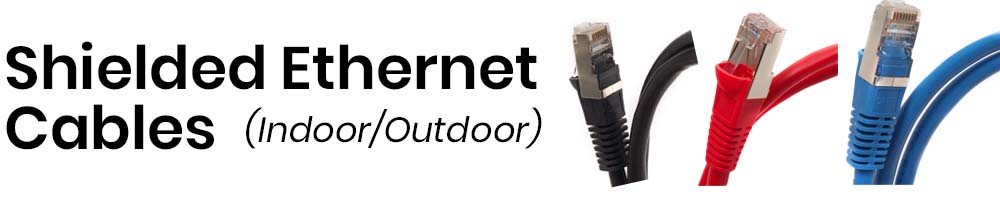
Shielded Ethernet Cables: When and Why to Use Them
Shielded ethernet cables are designed to reduce electromagnetic interference (EMI), a common challenge in complex or industrial networking environments. When multiple cables run close together-especially near elevators, heavy machinery, or fluorescent lighting-"alien crosstalk" and noise can disrupt signal integrity. Shielded cables add a protective layer to maintain stable performance in such conditions.
-
Cat6 Shielded Ethernet Network Cables
Shielded Cat6 Ethernet Cables for High-Interference Environments Shielded Cat6 Ethernet cables offer critical...
-
Category 5e Shielded Ethernet Cables
Cat5e Shielded Ethernet Cables for EMI-Prone Environments In network environments where electrical...
-
Category 6A Ethernet Cables Shielded
Cat6A Shielded Ethernet Cables Category 6A cables are rated for speeds of...
These cables are particularly well-suited for outdoor and direct burial use. Their construction provides resistance to water, physical damage, and interference from surrounding electrical sources. For effective use, all components in the connection-including jacks and panels-must be shielded and properly grounded to ensure full protection. Mixing shielded and unshielded components is not recommended, as it can compromise effectiveness.
Available Options:
- Cat5e Shielded Outdoor-Rated Cables
- Cat6 Shielded Outdoor-Rated Cables
- Cat6a Shielded Outdoor-Rated Cables
Shielded Ethernet isn't typically necessary for basic residential or small office setups. However, in outdoor runs, manufacturing facilities, or high-EMI environments, it's an essential choice to ensure network stability and signal clarity.
Common Considerations:
Home or Office Use? Most home users don't need shielded Ethernet. If EMI isn't a concern, unshielded Cat6 or Cat5e usually suffices.
Cost vs. Benefit? Shielded cables offer added protection but come at a higher price. The investment is worthwhile only when EMI or outdoor durability is a concern.
Shielded vs. Unshielded? The right choice depends on your environment. Learn more in our guide comparing shielded and unshielded Ethernet.
For larger projects or outdoor networks, shielded cables provide dependable insulation and long-term performance-even in harsh conditions.